How Midstream Operators Are Using AI to Get Ahead of Downtime

The Real Cost of Reactive Operations
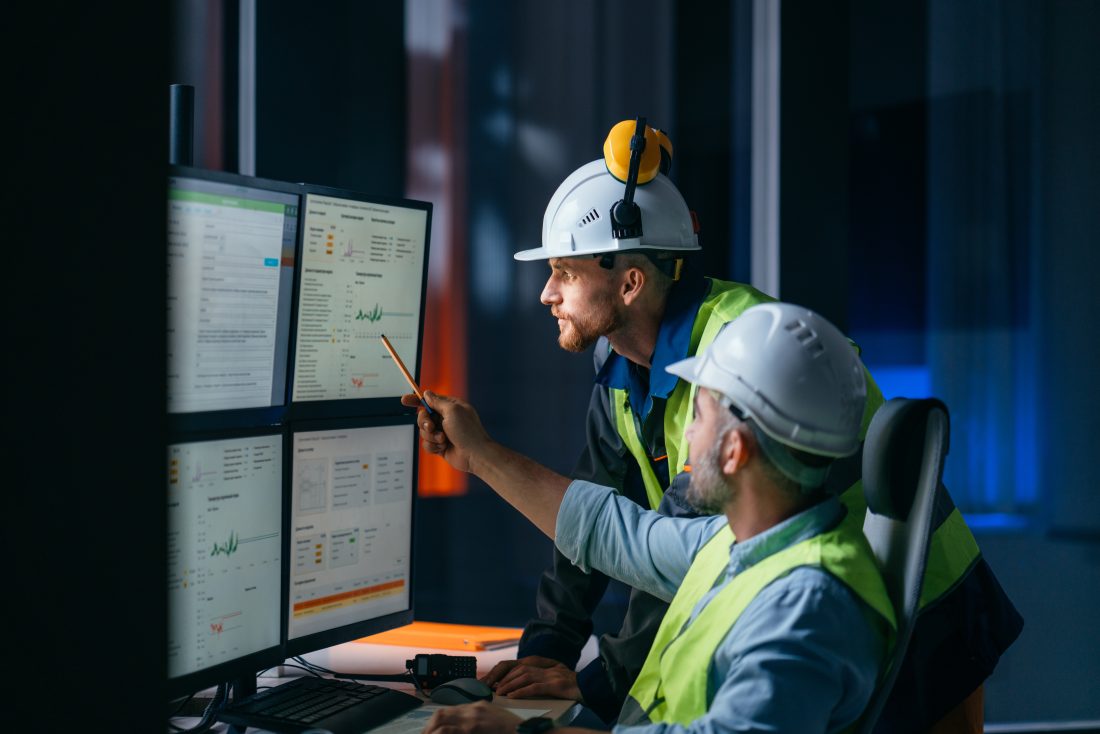
In midstream, the expectation is simple: keep it running. But your day still looks the way it always has — something deviates, an alarm trips, and you spend the next several hours chasing a problem that was already showing signals long before it sounded.
That cycle has been the norm not because you want it that way, but because there hasn't been a better option.
There is now.
AI-driven process controls is giving midstream operators something they've never had before: the ability to see what's coming, act before problems escalate, and run a smarter, more reliable operation — without replacing the systems and infrastructure already in place.
What Is AI-Driven Process Controls?
AI-driven process controls is a software layer that sits next to your existing PLC, DCS, or SCADA system, reads your live process data, and uses machine learning to detect patterns, predict deviations, and recommend or automate control adjustments in real time.
It's not a science project. It's not a black box. It's not a rip-and-replace. It's an additional set of eyes — eyes that never blink, never get tired, and learn more about your process every hour they run.
Where traditional control systems react to setpoints and alarms, AI-driven control anticipates them. That's the difference between cleaning up a problem after the fact and preventing it from showing up at all.
Meet Koios — AI Built for the Plant Floor
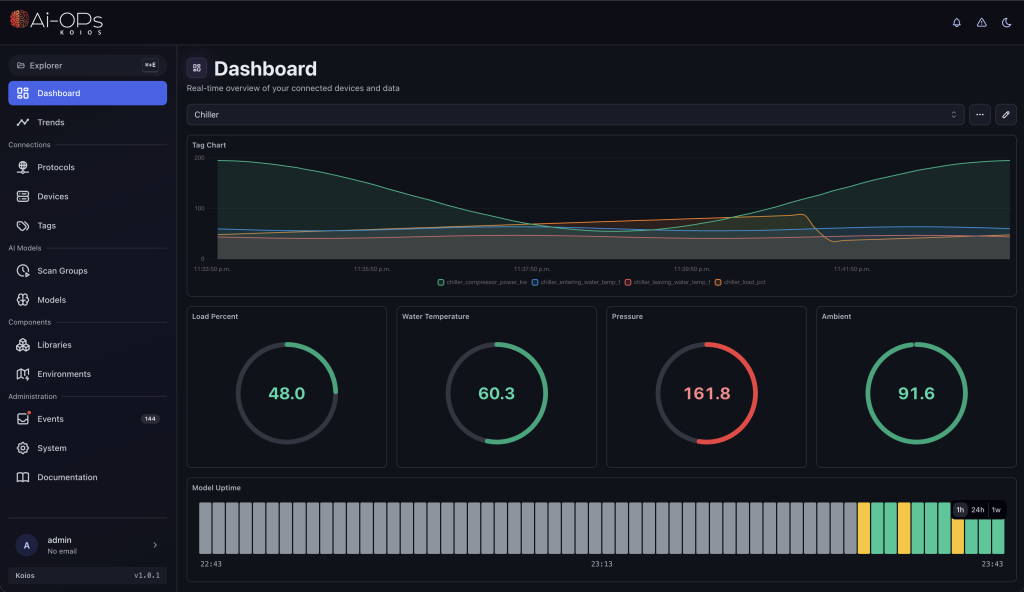
TriNova has partnered with Ai-OPs to bring the Koios platform to midstream operators. Koios is built around one foundational idea: AI should work with your existing operation, not against it.
Koios operates adjacent to your current PLC, DCS, or SCADA system. It reads your live process data, translates it into actionable intelligence, and enables real-time control decisions — all within a secure, on-premises environment. No vendor lock-in. No complicated overhaul. No downtime during deployment.
You get a smarter layer on top of what you already have — one that continuously learns, continuously optimizes, and continuously delivers.
For midstream operators specifically, that means:
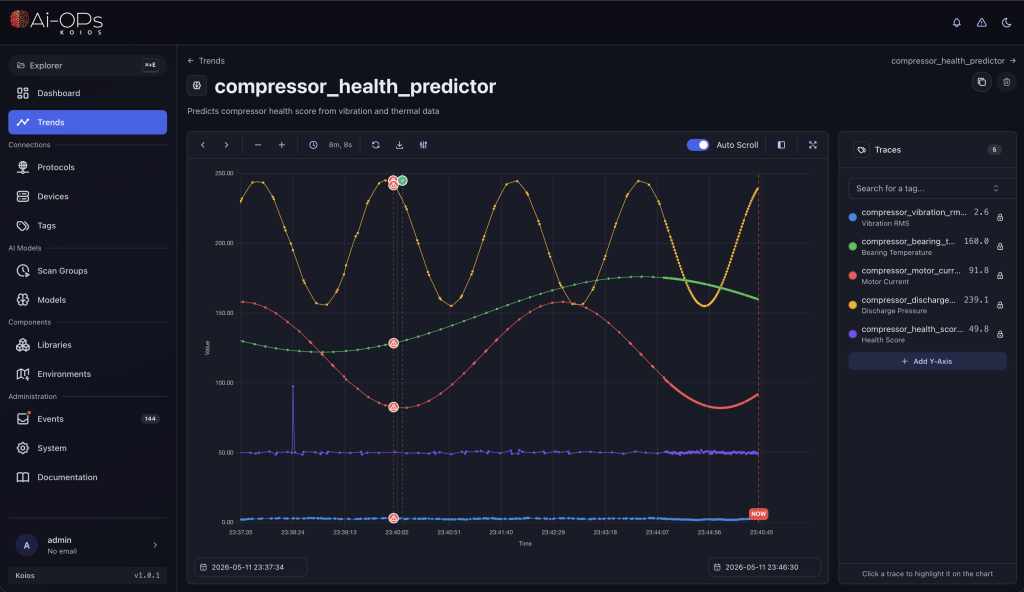
- Fewer unplanned outages. Koios detects pressure fluctuations, temperature anomalies, and flow irregularities earlier than any operator can manually — giving your team time to respond before a deviation becomes a failure.
- Fewer operator interventions. Pre-trained AI models handle routine optimization decisions automatically, freeing your operators to focus on higher-value work and reducing the alarm fatigue that leads to missed signals.
- Better energy efficiency. Real-time optimization keeps equipment running closer to its most efficient point — reducing fuel and power waste and extending the life of critical assets.
- A system that gets smarter over time. Unlike traditional controls, Koios improves with every hour of operation. The longer it runs, the more it understands your process — and the more value it delivers.
Where AI Earns Its Keep in Midstream
Midstream is a great fit for AI-driven control because the consequences of a missed signal are high and the data is plentiful. The applications we see most often include:
- Compression and pumping stations — predicting bearing, seal, and surge conditions before they trip a unit offline.
- Gas processing and treating plants — optimizing temperature, pressure, and flow across amine units, glycol dehydrators, and JT skids in real time.
- Pipeline flow and pressure control — catching subtle drift in flow profiles or pressure relationships that signal a developing problem.
- Custody transfer and metering — flagging measurement anomalies that affect allocation and revenue.
- Storage and terminal operations — anticipating tank-level, vapor recovery, and pump-station deviations before they become events.
- Emissions monitoring and compliance — identifying drift and uncertainty in CEMS and analyzer data before reporting becomes a problem.
If your operation generates time-series data and you're tired of being reactive, there's almost certainly a place AI can earn its keep.
AI That Empowers Your Engineers — Not Replaces Them
The single most common question we hear from operations teams is this: "Will AI replace our people?" With Koios, the answer is a clear no.
Our AI doesn't replace your engineers — it empowers them. Koios is built to augment human expertise, not substitute for it. Your team's process knowledge is what makes the AI model accurate and effective.
What changes is the quality of information your engineers have to work with. Instead of reacting to what already happened, they're acting on what's about to happen.
Implementation Without Disruption
Deploying AI at a midstream facility sounds like a major undertaking. With Koios, it isn't.
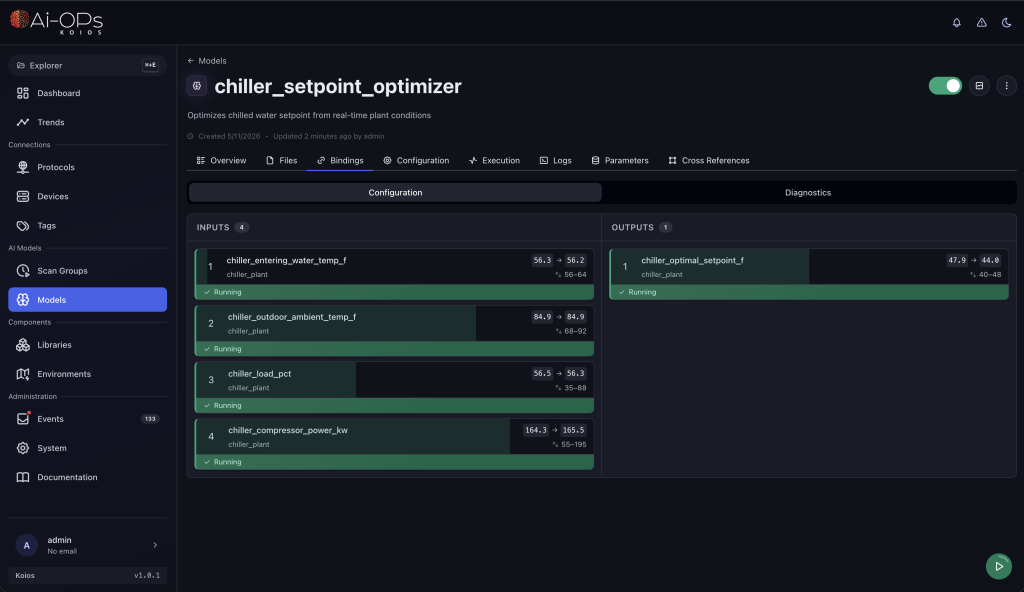
The platform is engineered for seamless integration with universal hardware compatibility — PLC, DCS, SCADA, it doesn't matter what you're running. AI models are trained offline using your historical data, so there's no live trial-and-error period on your active process. And bumpless mode transfer means you can switch between your existing control system and AI control without process interruption.
The path to value follows three steps:
- Schedule a discovery call. Our engineers explore your specific control challenges, walk you through real midstream use cases, and demonstrate Koios live.
- Identify a process to optimize. We choose one control loop or unit operation to run a Pilot Project — measurable improvement in just weeks, not quarters.
- Scale across your plant. Once the pilot proves value, we expand the solution to additional applications — with continuous support and training the whole way.
From discovery call to pilot to full-scale deployment, TriNova walks with you at every step. We don't hand you software and walk away. Our team provides ongoing support, performance monitoring, and model maintenance — because our goal is a system that keeps improving, not one that plateaus after go-live.
The Cost of Doing Nothing
Reactive operation isn't free. Even when nothing dramatic happens, you're paying for it in:
- Unplanned downtime that disrupts schedules, contracts, and customer commitments.
- Energy and fuel waste from equipment running off its efficient point.
- Operator fatigue from chasing nuisance alarms instead of doing higher-value engineering work.
- Premature wear on compressors, pumps, valves, and analyzers running outside ideal conditions.
- Compliance and reporting risk when measurement data drifts unnoticed.
- Margin erosion that nobody attributes to a single cause — because the cause is everywhere.
AI doesn't eliminate every one of those — but it reliably moves them in the right direction.
Not Sure If You're Ready? Let's Find Out Together.
Every operation is different, and AI isn't a one-size-fits-all conversation. If you're not sure whether Koios is the right fit for your facility right now, that's exactly the kind of question we're built to answer.
Schedule a discovery call with a TriNova solutions engineer. We'll review your current process challenges, walk you through how Koios performs in real midstream applications, and give you an honest assessment of where AI can deliver the most value. If something else needs to come first — measurement, calibration, data infrastructure — we'll tell you. (That's also why we built our AI Readiness Roadmap.)

Who is TriNova?
TriNova is a team of field-tested industrial experts who’ve been helping businesses run smarter for more than 70 years.We don’t just offer products and services — we deliver confidence. From calibration to commissioning, training to troubleshooting, we’ve done it all — and done it well. Our customers know they can count on us to deliver reliable service with a human touch.